XGRIDSDocs
  • 简体中文
  • English
  • 繁體中文
  • 日本語
  • Deutsch
  • Español
  • Italiano
  • Français
  • Русский
  • 简体中文
  • English
  • 繁體中文
  • 日本語
  • Deutsch
  • Español
  • Italiano
  • Français
  • Русский
  • PortalCam

    • Product Overview
    • Basic Operation
    • Using the LCC Scan App
    • Maintenance and Care
    • FAQ
  • Lixel K Series

    • Lixel K1

      • Product Overview
      • Basic Operation
      • Device Activation and Connection
      • Scanning Workflow
      • Acquire Point Cloud Data with Absolute Coordinate
      • Map Fusion
      • Route Planning Suggestions for Typical Scenes
      • Precautions
      • FAQ
    • Lixel K2

      • Product Overview
      • Basic Operation
      • Device Activation and Connection
      • Scanning Workflow
      • Acquire Point Cloud Data with Absolute Coordinate
      • Map Fusion
      • Route Planning Suggestions for Typical Scenes
      • Precautions
      • FAQ
  • Lixel L Series

    • Lixel L2 Pro

      • Product Overview
      • Basic Operation
      • Device Activation and Connection
      • Scanning Workflow
      • Acquire Point Cloud Data with Absolute Coordinate
      • Measure Point
      • Appendix
      • FAQ
  • Lixel Studio

    • Version and Copyright
    • Installation and Activation
    • Software Interface
    • File Operations
    • Project Processing
    • Tools
    • 2D Drawing
    • Applications
    • Settings
    • Device Connection
  • Lixel CyberColor

    • LCC Studio

      • Getting Started
      • Version and Updates
      • Download and Installation
      • Interface Overview and Navigation
      • Before Reconstruction
      • Model Reconstruction
      • Single Model Reconstruction
      • Map Fusion
      • Aerial-Ground Fusion
      • Aerial Reconstruction
      • My Models
      • Other Features
      • Settings and Account
      • Converter
      • Video Reconstruction
      • FAQ
    • LCC Scene Editor

      • Version & Updates
      • Account & Login
      • Product Overview & Home
      • Editor Interface
      • Scene Navigation Modes
      • File
      • Settings
      • Edit Operations
      • Window
      • Global Toolbar
      • Assets & Properties
      • Left Toolbar
      • Viewpoints
      • Portal
      • Skybox
      • Annotations
      • Measurement
      • Flythrough
      • Scene Report
      • 3D Layout
      • Mini-Map
      • Preview Mode (Viewer)
      • Help
      • FAQ
      • Spawn Point
    • LCC Model Editor

      • Version and Updates
      • User Guide
      • Overview and Interface
      • File Operations
      • Selectors
      • Editing Models
      • Measurement
      • Color Grading
      • Asset Management
      • Settings and Help
      • FAQ
    • Capture Guide

      • Overview
      • Capture Devices Overview
      • General Capture Principles
      • Indoor Scene Capture
      • Outdoor Scene Capture
      • Large-Scale Capture (Map Fusion)
      • Aerial-Ground Map Fusion Capture
      • Object Capture
      • People Capture
      • Video Reconstruction Capture
      • HD Enhancement
      • Control Points (Lixel P1)
      • FAQ and Troubleshooting
    • Version History
  • Plugin & SDK

    • Unreal

      • Introduction
      • Quick Start - Windows
      • Quick Start - Linux
      • Quick Start - Quest3
      • Editions and Licensing
      • Rendering
      • Visual Settings
      • Normals and Lighting
      • Scene Editing
      • Performance Parameters
      • Performance Guide
      • Third-party and Engine Plugin Integration
      • Proxy Mesh
      • Loading Animation
      • Collision
      • Navigation System Support
      • Single Layer Water Support
      • Localization
      • FAQ
      • Troubleshooting
      • Logging and Diagnostics
      • Contact Us
      • API Reference

        • ALCCActorBase
        • ULCCComponentBase
        • ULCCComponent
        • ULCC2Component
        • SOG / SPZ / PLY Actors
        • ALCC2ProxyMesh
        • ALCCClippingVolume
        • ALCCSectionPlane
        • ULCCUtilLibrary
        • Enums
        • Structs
      • Changelog

        • v3.3.1
        • v3.0.0
        • v2.2.1
        • v1.0.0
        • v0.9.0
        • v0.8.0
        • v0.7.1
        • v0.6.1
        • v0.5.2
        • v0.4.1
        • v0.4.0
        • v0.3.0
        • v0.0.5
        • v0.0.4
        • v0.0.3
        • v0.0.2
        • v0.0.1

3DGS Scene Clipping and Sectioning

Clipping Volumes

A clipping volume can be scaled, moved, and rotated freely, which helps developers clip an LCC scene spatially.

  • A single Actor supports up to 65536 clipping volumes, limited to 50 in the free edition; see Editions and Licensing
  • Box and sphere shapes are supported, and both can be scaled, moved, and rotated

Note: clipping only affects the final rendering. Clipped-away areas still take part in node traversal, load, and video memory upload as usual. Clipping therefore cannot reduce the load amount or video memory usage; use the methods in the Performance Guide to control those costs.

Steps

  1. Place an LCCActor/LCC2Actor and load the scene.
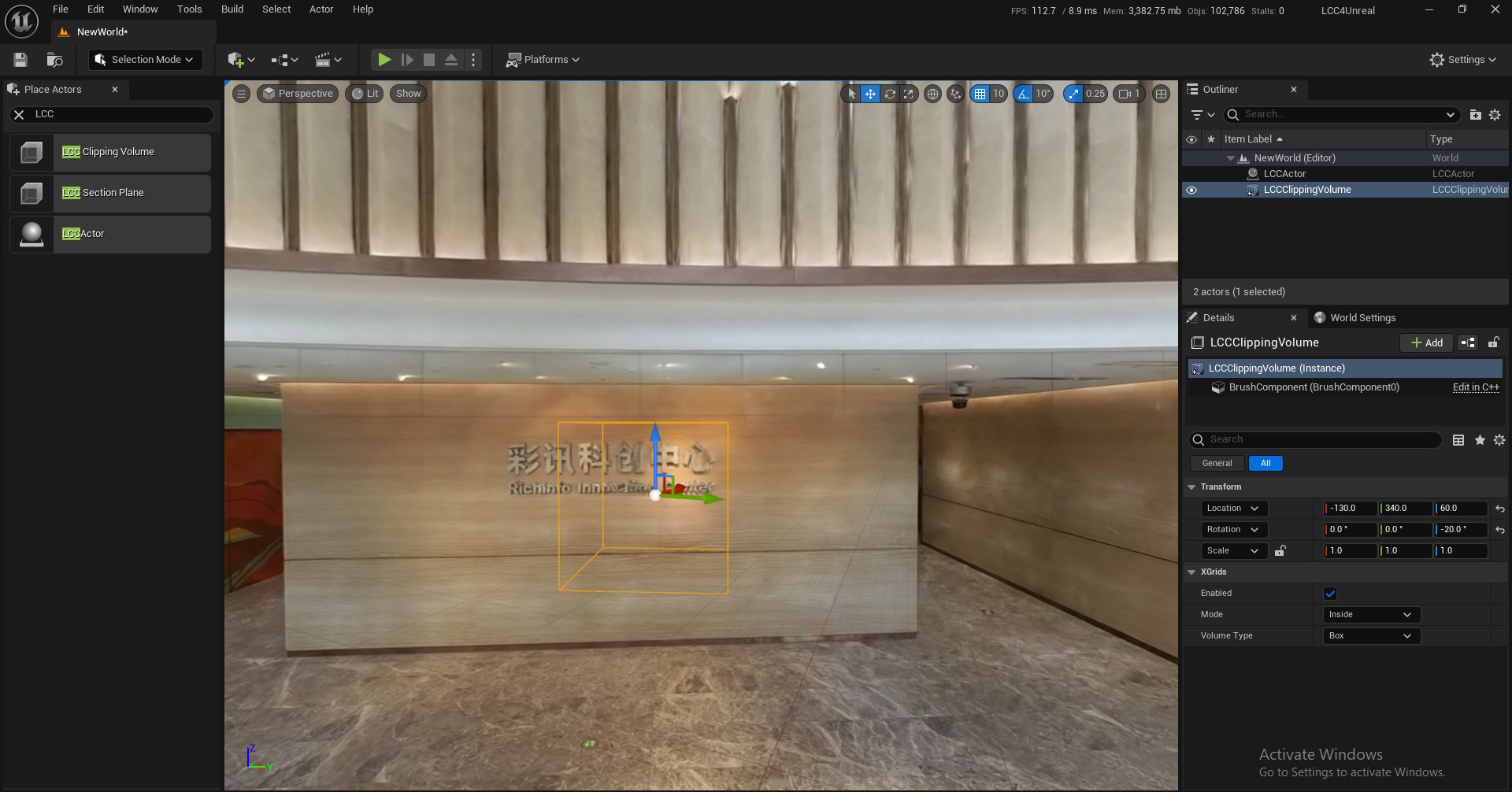
  2. Drag LCC Clipping Volume into the scene.
Placing an LCC Clipping Volume into the scene

Dragging an LCC Clipping Volume into the scene

  1. Move the clipping volume to the target position.
  2. Add the Clipping Volume to the ClippingVolumes array in the Details panel of the Actor.
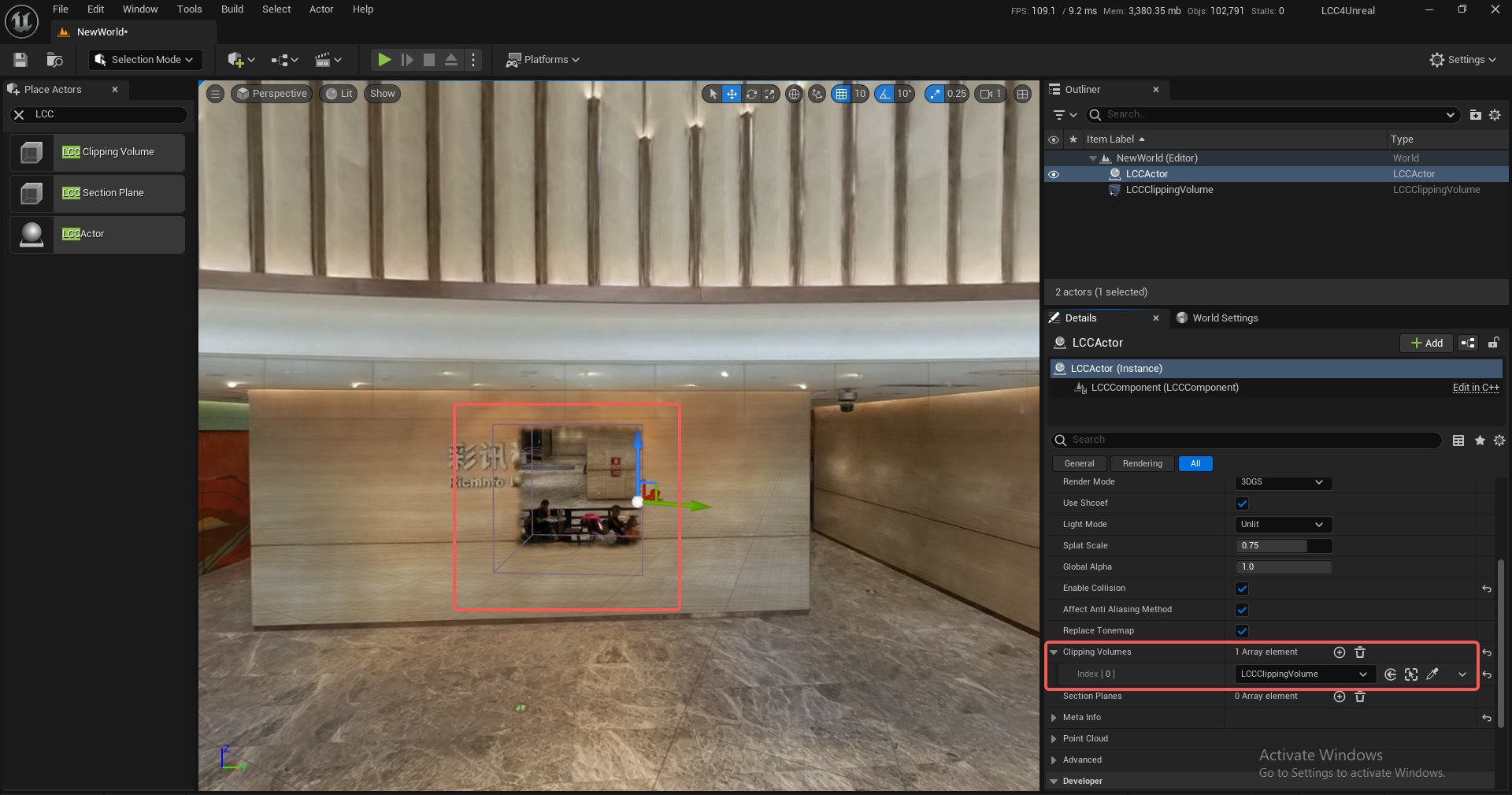
Inside clipping result of a clipping volume

The Inside clipping result of a clipping volume

Demo
Moving a clipping volume and the resulting clipping

Moving a clipping volume and observing the clipping in real time

Properties

PropertyDescription
bEnabledWhether it is enabled
ModeInside (clip inside) or Outside (clip outside)
VolumeTypeBox or Sphere

Blueprint Methods

LCCComponent → AddClippingVolume
LCCComponent → RemoveClippingVolume
ClippingVolume → Refresh()
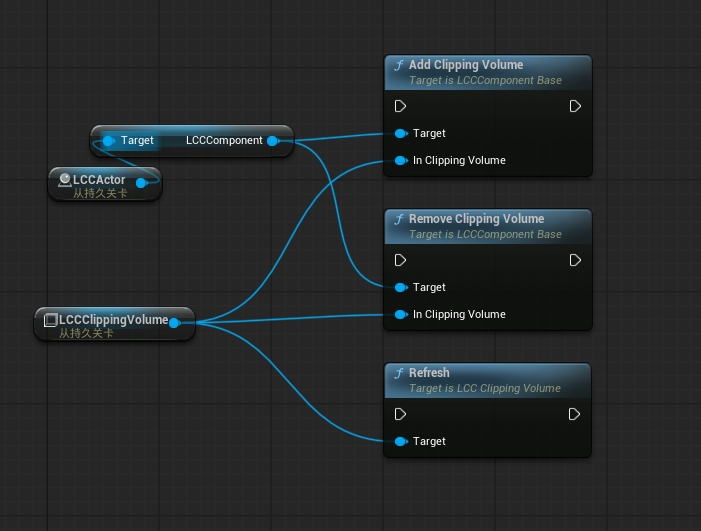
Blueprint nodes for adding, removing, and refreshing a clipping volume

Adding, removing, and refreshing a clipping volume with Blueprint nodes


Section Planes

A section plane can be scaled, moved, and rotated freely to section the scene along a plane.

  • A single Actor supports up to 65536 section planes, limited to 50 in the free edition; see Editions and Licensing
  • Sectioning upward or downward is supported, and the count is tracked separately from clipping volumes

Note: sectioning only affects the final rendering. Sectioned-away areas still take part in node traversal, load, and video memory upload as usual. Sectioning therefore cannot reduce the load amount or video memory usage.

Steps

  1. Place an LCCActor/LCC2Actor and load the scene.
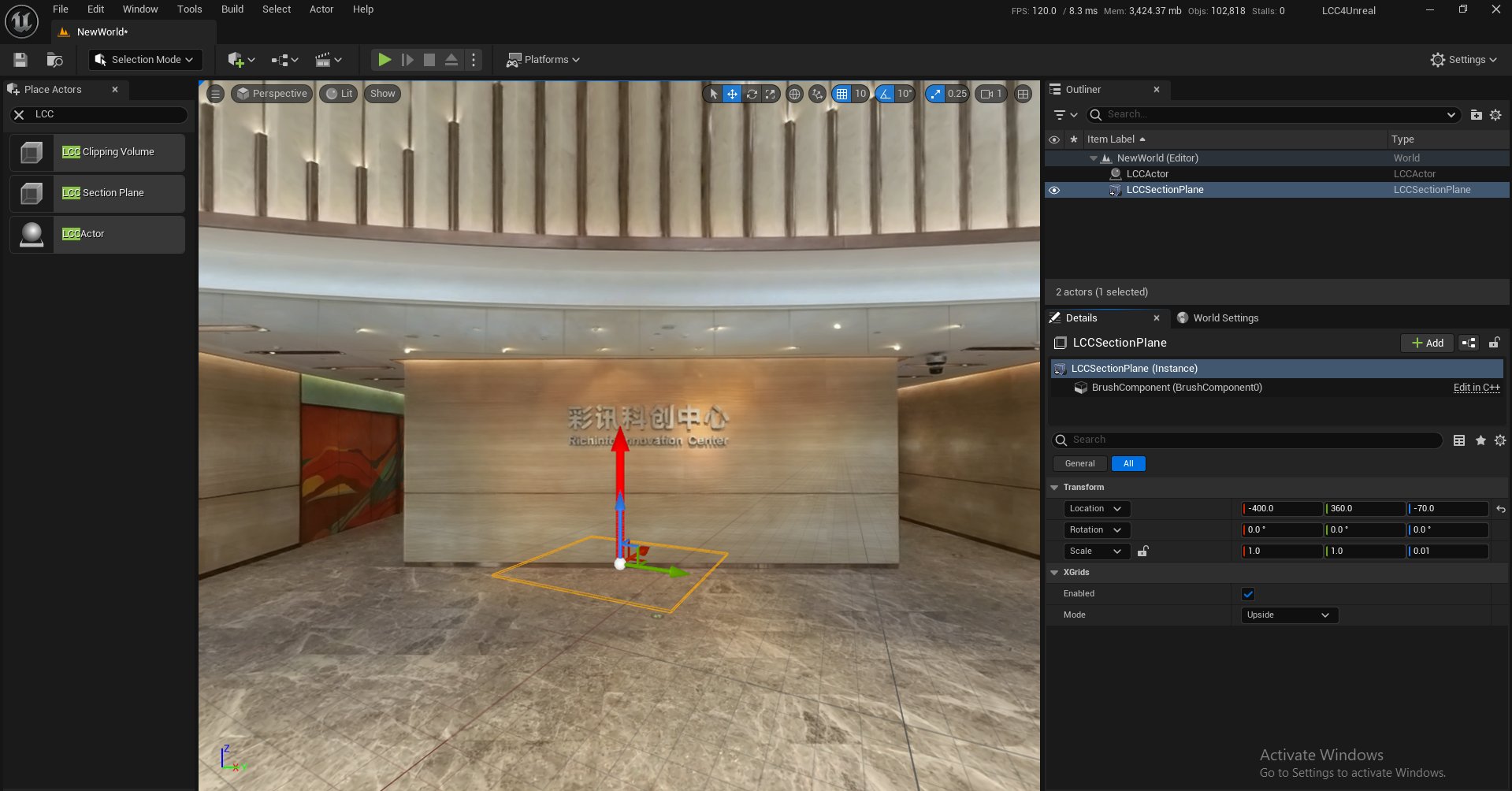
  2. Drag LCC Section Plane into the scene.
Placing an LCC Section Plane into the scene

Dragging an LCC Section Plane into the scene

  1. Move it to the target position.
  2. Add the Section Plane to the SectionPlanes array in the Details panel of the Actor.

Demo
Moving a section plane and the resulting sectioning

Moving a section plane and observing the sectioning in real time

Properties

PropertyDescription
bEnabledWhether it is enabled
ModeUpside (section upward) or Downside (section downward)

Blueprint Methods

LCCComponent → AddSectionPlane
LCCComponent → RemoveSectionPlane
SectionPlane → Refresh()
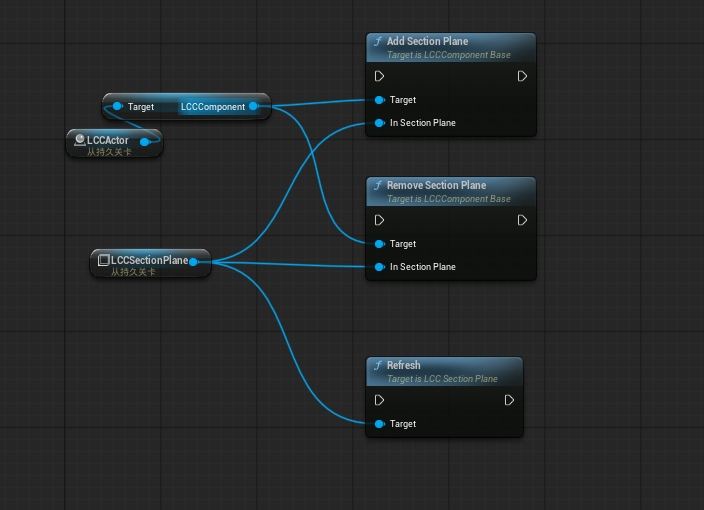
Blueprint nodes for adding, removing, and refreshing a section plane

Adding, removing, and refreshing a section plane with Blueprint nodes


Prev
Normals and Lighting
Next
Performance Parameters